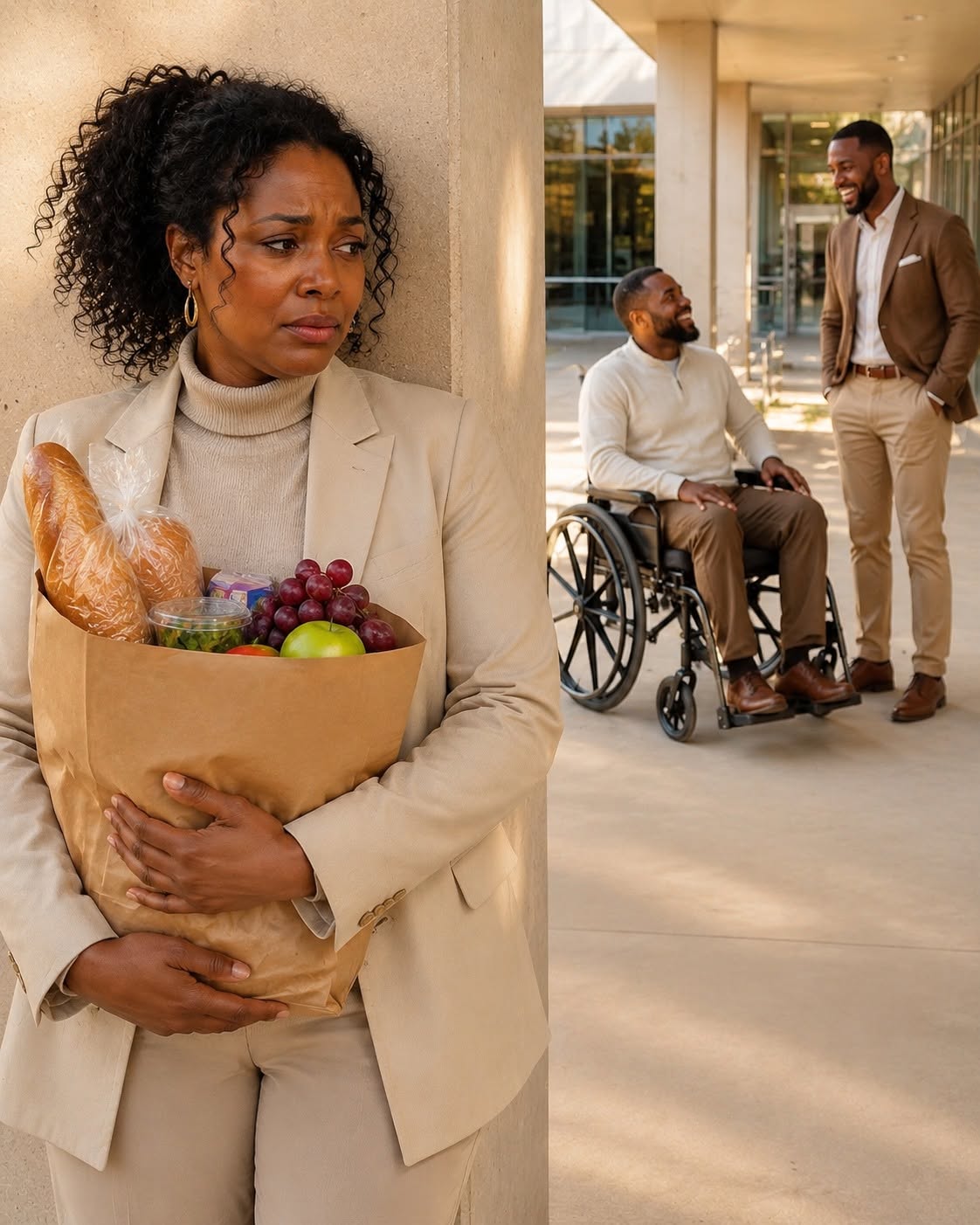
If someone says five years out loud, it sounds almost trivial, like a small chapter easily turned. Yet when those five years are measured not in calendars but in hospital corridors, prescription schedules, and the stale scent of antiseptic that never quite leaves your clothes, time does not pass normally.
It congeals. It presses against your chest. It becomes something you carry rather than live inside.
My name is Marianne Cortez, and I am thirty two years old. When I look into the mirror now, I no longer recognize the woman staring back.
Her shoulders slope forward as if bracing for impact. Her eyes are ringed with shadows that sleep has not touched in years.
Her hands tell the story more clearly than her face, roughened by endless washing, by lifting weight that was never meant to be carried alone, by gripping the rails of wheelchairs and the edges of hospital beds.
There was a time when my life looked ordinary, even hopeful.
I met my husband, Lucas Cortez, at a neighborhood fundraiser in Boulder. He was charming in a way that made people feel chosen. When he spoke, rooms leaned in.
When he smiled, you believed he meant it just for you. We married quickly, fueled by plans that felt solid and shared. Children. Travel.
A larger house somewhere quieter. A future that felt earned.
That future shattered on a stretch of road outside Golden, on a curve locals always warned about and everyone believed they could handle.
Lucas had been returning from a regional sales conference. Another driver crossed the median after too much to drink.
The impact tore metal apart and spared Lucas his life while stealing the lower half of his body.
The neurologist at Front Range Medical Pavilion spoke gently but without illusion. He explained the damage in clinical terms, his voice steady as he described permanence.
When he finished, there was a silence heavy enough to swallow sound.
I did not cry then. I reached for Lucas’s hand and promised him I would not leave. I told him we would adapt. I believed that love meant endurance.
What I did not understand was how slowly sacrifice can hollow a person out.
The years that followed were composed of repetition. Alarms before dawn. Medication schedules taped to the refrigerator.
Insurance calls that went nowhere. Nights spent on the sofa so I could hear if Lucas called out.
I learned how to lift without injuring him, how to smile while exhausted, how to swallow resentment because people praised me for being strong.
On one particular Tuesday, which could have been any Tuesday in those five years, my alarm rang at four thirty in the morning.
The city outside was dark and cold, the kind of quiet that makes your thoughts echo too loudly.
I moved carefully, dressed in clothes chosen for function rather than dignity, and ran through the day’s checklist in my mind.
Lucas had been asking for pastries from a bakery near the hospital. He said the hospital food made him feel like a burden. I told myself that bringing him something warm and familiar might ease that weight.
The bakery was already lit when I arrived. The smell of butter and sugar wrapped around me, and for a moment I pretended I was simply another woman buying breakfast for someone she loved.
The cashier smiled and asked, “What can I get you this morning.”
“Two cinnamon rolls and a box of plain pastries,” I replied. “And a black coffee.”
I paid in cash, counting carefully, and drove toward the hospital with the bag on the passenger seat, imagining Lucas’s expression when I arrived.
Inside the building, the familiar chill of disinfectant greeted me. A volunteer told me Lucas was in the courtyard with another patient.
I walked toward the glass doors, adjusting my hair, trying to look less tired than I felt.
That was when I heard his voice.
“You get used to it,” Lucas was saying. “People think it is tragic, but honestly, it has its advantages.”
Another man laughed and replied, “Your wife does everything. That does not bother you.”
Lucas’s answer came easily. “Why would it. Marianne is reliable. She does not go anywhere. She has nowhere to go.”
My breath caught as I stood frozen just outside their line of sight.
The other man chuckled. “Sounds like you landed well.”
“I did,” Lucas said. “I have care without cost. No facility. No bills. Just patience and hope keeping her in place.”
“What about inheritance,” the man asked.
Lucas lowered his voice slightly, though not enough to escape me. “My assets are secured for my son and my sister. Family stays family. Marianne thinks loyalty earns permanence.”
They both laughed.
I stood there holding a bag of pastries that suddenly felt obscene. The love I thought I was giving had been converted into convenience. The devotion I offered had become leverage.
I did not confront him. I did not cry in front of them. I turned away quietly and threw the bag into a trash bin near the exit.
As I walked back to my car, something inside me settled. Rage burned, but beneath it was clarity. If I reacted emotionally, I would lose everything. If I waited, I could reclaim myself.
Lucas texted minutes later asking where I was and complaining about hunger. I replied calmly that my car had stalled and I would be late.
Instead of returning home, I drove to the county library and sat among shelves of books, opening my laptop with hands that finally felt steady.
Over the following weeks, I became meticulous. I continued my routine, continued caring for Lucas, continued playing the role he expected, while quietly gathering proof.
Financial documents. Legal paperwork. Insurance policies that named everyone but me. Conversations recorded legally. Patterns documented carefully.
I contacted an old colleague, Natalie Grayson, who listened without interruption and then gave me the name of an attorney known for precision rather than mercy. Evelyn Porter did not offer sympathy. She offered strategy.
When Lucas realized what was happening, it was already too late. Accounts were frozen. Filings were submitted. The narrative shifted from abandonment to exploitation.
He accused me of cruelty. His relatives accused me of betrayal. None of it held up.
The day I moved out, I did not feel dramatic. I felt light. The door closing behind me was not loss. It was release.
Months later, the hospital called me when Lucas was admitted again. I declined involvement. His care was now managed by those he had chosen.
Today, I sit in a sunlit café that Natalie and I opened together. I write during the quiet hours and watch people come and go, each carrying lives I no longer envy or fear.
I am no longer a shadow holding someone else upright.
The grill hissed like an animal learning to breathe again. Beyond it, the blue ridge foothills sloped down toward a neighborhood that slept in cul-de-sacs and woke to lawnmowers.
Folding chairs bit into crabgrass. Men who used to salute each other pretended their back pain was weather.
I had not been home in almost a year.
I came straight from a change-of-command in DC, still in service dress whites because I’d run out of time and excuses to stop at quarters.
The uniform was a mistake for a barbecue, but I was too tired to change and too stubborn to hide.
The sun turned the brass on my ribbons into small signals. The day smelled like smoke and green things and the ache of old scripts.
He saw me first. My father. Gray now, skin the color of stubbornness, a can of beer balanced in the grip that used to hold clipboards like gospels.
The corner of his mouth curled and a familiar cheerfulness slid into place like a mask he’d never learned how to take off.
“After Five Years of Caring for My Paralyzed Husband, I Overheard Him Calling Me a ‘Free Maid’—And That Was the Moment I Disappeared”
The first thing I did after I walked away was nothing.
Not crying.
Not shaking.
Not collapsing into some dramatic version of heartbreak.
Just… nothing.
Because there is a kind of silence that only appears after something inside you finally breaks cleanly enough to stop bleeding.
That night, Lucas came home like nothing had changed.
Because in his world, nothing had.
He lay in the adjustable hospital bed we had installed in our bedroom five years ago, the room still smelling faintly of antiseptic and machine-cleaned air.
He looked at me as if I were late.
Not absent.
Just inconveniently delayed.
“Where were you?” he snapped immediately.
His voice was sharp, practiced, impatient.
“Did you bring the bread?”
I stood in the doorway for a moment longer than necessary.
Looking at him.
Really looking at him.
Not as the man I had once married.
But as the man I had been serving.
“I forgot,” I said calmly.
The words surprised him.
Not the content.
The tone.
Because I had never forgotten anything in five years.
Not medication schedules.
Not transfer techniques.
Not the precise angle to turn his body so his skin wouldn’t tear.
Not once.
He frowned.
“Forgot?” he repeated.
Like the concept itself was offensive.
I walked over to him.
Adjusted his pillow.
Straightened his blanket.
All the motions were familiar.
Automatic.
And that’s what made them terrifying.
“You’ve been distracted lately,” he muttered.
Then added, sharper:
“You should be more careful.”
I nodded.
“Yes,” I said.
“I should.”
That night, I didn’t sleep beside him.
For the first time in five years.
I sat in the kitchen instead.
Listening.
Not to him.
But to myself.
And I realized something simple.
I had not been living in that house.
I had been maintaining it.
The next morning, nothing changed on the surface.
I still woke up early.
Still prepared his medication.
Still checked his vitals.
Still performed the rituals of care that had once been love and were now something else entirely.
But inside me, something irreversible had already begun.
Quiet.
Precise.
Patient.
Lucas noticed nothing.
Of course he didn’t.
Men like him never notice the moment the person serving them stops being a person.
Days passed.
Then weeks.
I became quieter.
More efficient.
Less present in ways he could not measure.
He mistook it for obedience.
He always had.
One afternoon, his son, Adrian, came over.
He walked past me without greeting.
As always.
Phone in hand.
Headphones in.
Existing in the same space without ever entering it.
“Make sure dinner is ready,” he said without looking up.
I nodded.
“I will.”
Lucas watched me from the bed.
Smirking slightly.
“That boy needs structure,” he said.
Then added:
“Good thing you’re here.”
I smiled.
Not because it was kind.
But because it was useful.
Because I had started noticing something else now.
Patterns.
Weak points.
Dependencies.
The architecture of comfort he had built around himself without ever realizing who was holding it up.
Five years of silence teaches you things.
Things people mistake for loyalty.
But are actually just observation.
The first shift came on a Tuesday.
I didn’t adjust his medication correctly.
Not dangerously.
Just slightly off schedule.
A delay of twenty minutes.
He noticed immediately.
“Why is this late?” he demanded.
I looked at him calmly.
“I was busy.”
That sentence alone unsettled him.
Because I had never been busy before.
Not in his presence.
He stared at me longer than usual.
“Busy with what?” he asked.
I shrugged.
“Things.”
That was the first time I saw uncertainty in his face.
Faint.
Almost invisible.
But there.
That night, I didn’t correct it.
The second shift came two days later.
I stopped anticipating his needs before he voiced them.
I waited.
Let him speak.
Let him ask.
Let him experience absence in small doses.
He grew irritated.
More demanding.
Less patient.
Exactly as I expected.
“What’s wrong with you lately?” he snapped one evening.
I adjusted his wheelchair brake calmly.
“Nothing,” I said.
But something had changed.
He knew it.
Even if he couldn’t name it.
And that is the most dangerous kind of change.
The kind that cannot be argued with.
Only felt.
The turning point came when I stopped pretending.
Not dramatically.
Not with confrontation.
But with precision.
I began documenting everything.
Not out of revenge.
Out of clarity.
Because truth, when observed carefully enough, becomes undeniable even to those who refuse to see it.
His words.
His assumptions.
His jokes.
His belief that I was “free labor.”
I recorded it all.
Quietly.
Patiently.
And in those recordings, I no longer recognized the man I had been serving.
I recognized something colder.
More entitled.
More certain.
Not a patient.
A ruler.
In a wheelchair.
One evening, he laughed with his friend on a video call while I prepared his room.
I didn’t interrupt.
I just listened from the doorway.
“She’s still here?” his friend asked.
Lucas laughed.
“Of course she is.”
A pause.
“Where else would she go?”
And then the line that had shattered everything inside me months earlier resurfaced.
Except this time, I didn’t feel it break me.
I felt it organize me.
“She’s a free maid,” Lucas said.
“A useful idiot.”
Laughter followed.
Easy.
Comfortable.
Earned.
I stood in the hallway long after the call ended.
And I realized something important.
They had never once considered that I might be listening.
The final week did not begin with anger.
It began with preparation.
I contacted a lawyer.
Quietly.
Professionally.
Without emotion.
I reviewed financial records.
Insurance documentation.
Care agreements.
Everything that defined what I had legally become in that house.
Not a wife.
Not a partner.
But an unpaid caregiver performing labor that would cost more than he had ever acknowledged.
The irony was almost gentle.
He had called me “free.”
But nothing about me had ever been free.
On the last morning, I woke up before him.
As always.
But this time, I didn’t prepare medication.
Instead, I stood beside his bed.
And waited until he opened his eyes.
“You’re early,” he muttered.
I nodded.
“Yes.”
A pause.
“I wanted to say something.”
He sighed.
Impatient.
“Make it quick.”
I looked at him for a long moment.
Not with anger.
Not with sadness.
But with something far more final.
“Five years,” I said softly.
“That’s how long I stayed.”
He frowned.
“Doing your job,” he replied automatically.
I shook my head.
“No,” I said.
“Doing yours.”
Silence.
For the first time, he didn’t have a response ready.
I picked up my bag from the chair.
The one I had packed the night before.
He hadn’t noticed.
Of course he hadn’t.
“You can’t just leave,” he said suddenly.
A hint of panic now.
Sharp.
Unfamiliar.
I smiled slightly.
“Watch me.”
And then I turned toward the door.
Behind me, his voice rose.
Anger first.
Then disbelief.
Then something almost like fear.
But I didn’t turn back.
Not once.
Because the truth was simple.
I hadn’t disappeared suddenly.
I had been disappearing for years.
He just never looked closely enough to notice.
Outside, the air felt different.
Not lighter.
Just mine.
And as I walked away from the house I had spent my twenties shrinking inside, I finally understood something that should have been obvious from the beginning:
Care is not love when it is one-sided.
It is just labor.
And labor, once recognized, can finally be refused.
I didn’t go far at first.
Just to a small apartment across town.
Nothing fancy. Nothing symbolic.
A place where no one knew my schedule, my habits, or the sound of my footsteps.
A place where silence didn’t mean obligation.
The first night there, I slept fully dressed.
Not because I was afraid.
Because my body didn’t yet understand it was allowed to rest without interruption.
My phone rang twice that night.
Lucas.
I didn’t answer.
Not out of cruelty.
Out of correction.
On the third call, I blocked the number.
And for the first time in five years, my hand didn’t shake while doing it.
The next morning, I woke up and did something that felt almost illegal:
I made coffee and drank it while it was still hot.
No interruptions.
No alarms.
No schedule built around someone else’s body.
Just time, existing without me serving it.
That was when I realized something strange.
Freedom doesn’t feel like celebration at first.
It feels like absence.
Meanwhile, back at the house, Lucas was learning what absence feels like too.
At least, that’s what I later heard.
The caregiver agency I had quietly contacted sent someone temporary.
Lucas rejected her within hours.
“She doesn’t know what she’s doing,” he reportedly said.
“She’s not like Marianne.”
That made me laugh.
Not because it was flattering.
But because it was accurate in a way he still didn’t understand.
No one was like me.
Because no one else had been trained by obligation.
Two days later, he called again.
From a different number.
I answered this time.
Not because I wanted to speak to him.
But because I wanted to hear the tone change.
“You can’t just leave,” he said immediately.
No greeting.
No softness.
Just entitlement dressed as panic.
I held the phone away from my ear for a second.
Then brought it back.
“You’re managing,” I said calmly.
A pause.
“I can tell.”
Silence on his end.
That was new.
“You think this is funny?” he snapped.
His voice sharper now.
Unstable.
“No,” I said.
“I think it’s late.”
That confused him.
I could hear it.
The way his breathing shifted slightly.
The way control was slipping out of sentences he used to own.
“What do you want?” he finally asked.
And there it was.
The question he should have asked five years ago.
I looked out the window.
People walking.
Cars moving.
Lives unfolding without negotiation.
“I don’t want anything,” I said.
A pause.
“I already gave everything I had to give.”
That was the truth he never understood.
Not that I was leaving him.
But that there was nothing left in me for him to take.
He tried again a week later.
This time softer.
Careful.
Rewritten tone.
“You’re overreacting,” he said.
“You’re exhausted. You need space.”
I almost laughed.
Because that version of him would have worked on me five years ago.
Not anymore.
“I’ve had space,” I said quietly.
“For five years.”
He didn’t respond immediately.
Because that sentence contained everything he had ignored.
Then he said something unexpected.
“I didn’t mean it.”
I closed my eyes briefly.
Not in emotion.
In recognition.
That was the problem.
He had meant it when he said it.
He just didn’t mean for me to hear it.
“I know,” I said simply.
And that was the end of the conversation.
After that, things escalated.
Not emotionally.
Practically.
He needed help again.
His son stopped visiting.
His friends stopped calling as often.
The world that had once revolved around convenience began rotating away.
And slowly, the house I had once maintained began to decay in small ways.
Not dramatically.
Just enough to notice.
Just enough to suffer.
That’s when I received the legal notice.
A formal attempt to “reestablish caregiving responsibility.”
The irony was almost elegant.
He was trying to legally reclaim a role I had silently resigned from.
My lawyer called me after reading it.
“He’s serious,” she said.
“But he doesn’t have a case.”
“I know,” I replied.
And I meant it.
Because this was never about legality.
It was about dependency.
And he was finally feeling what he had built.
A few days later, something unexpected happened.
I received a message from his son.
Short.
Awkward.
Almost confused.
“Where are you?” it said.
That was it.
No apology.
No warmth.
Just absence of certainty.
I didn’t reply immediately.
Because I realized something important.
He wasn’t asking where I was.
He was asking who would replace me.
Eventually, I wrote back:
“I’m somewhere I don’t have to disappear to exist.”
And I left it at that.
The final confrontation didn’t come dramatically.
There was no storm.
No breaking point in a cinematic sense.
Just a visit.
He arrived at my apartment one afternoon.
I saw him through the security camera before I opened the door.
Wheelchair.
Straight posture.
Face tighter than I remembered.
Not in control anymore.
I opened the door slowly.
Neither of us spoke for a moment.
“You left me,” he said.
Not angry.
Just factual.
Like a report.
I nodded.
“Yes,” I replied.
A pause.
“I stopped being your caregiver.”
His jaw tightened.
“That’s not what you were,” he said quickly.
“You were my wife.”
That sentence used to matter.
Now it felt like a category mistake.
“I was both,” I said calmly.
“And neither was respected.”
Silence again.
Longer this time.
He looked around the apartment like he expected evidence of replacement.
Someone new.
Something to justify the collapse.
“There’s no one else,” I said, noticing his glance.
“That’s not the point.”
“Then what is?” he asked.
And for the first time, there was something almost fragile in his voice.
I took a breath.
Not because I needed strength.
Because I needed clarity.
“The point,” I said slowly, “is that you didn’t see me as a person until I stopped acting like a resource.”
That landed.
Finally.
Not loudly.
But completely.
For a moment, he looked older.
Not physically.
Just structurally.
Like something internal had lost its support.
“I didn’t think you’d actually leave,” he said quietly.
I nodded.
“I know.”
A pause.
“That’s why I did.”
He looked down.
At his hands.
At the chair.
At everything that no longer responded to expectation.
“I don’t know how to do this without you,” he admitted.
And that was the first honest thing he had said in years.
But honesty does not repair damage.
It only acknowledges it.
“I do,” I said gently.
“That’s the difference.”
He didn’t ask me to come back again.
Not after that.
Because something in him finally understood what had changed.
Not my anger.
Not my disappointment.
My absence.
After he left, I sat by the window for a long time.
Not sad.
Not victorious.
Just still.
And I realized something I hadn’t allowed myself to see while I was inside that life:
I hadn’t been replaced.
I had been released.
And those are not the same thing.
One is loss.
The other is return.
That night, I cooked dinner.
For one person.
And ate it while it was still warm.
And for the first time in five years…
no one needed me to stay standing while I did.
